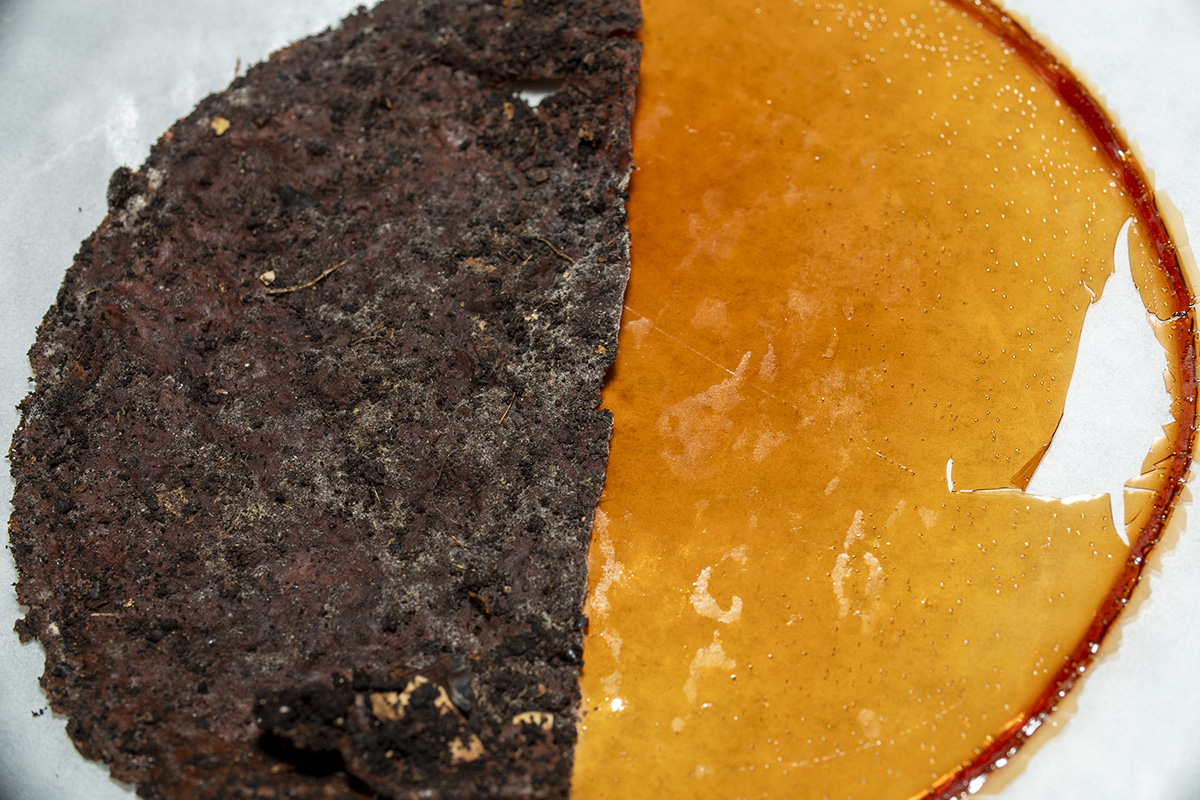
Ben Minkoff, a researcher in the lab of biochemistry professor Michael Sussman, didn’t set out in search of a sustainable alternative to petroleum-based plastic packaging. In fact, sustainable packaging wasn’t even on his radar. In late 2021, Minkoff, a biochemist, and fellow scientist Jamison Wolfer were experimenting with methods to dissolve dehydrated eggs. They were interested in learning whether reconstituted eggs retain nutritionally relevant biochemicals. Throwing the kitchen sink at the problem, Minkoff left egg proteins to dissolve in formic acid over the weekend.
With limited experience using pure formic acid, Minkoff hadn’t known what to expect. Pure formic acid has a wide variety of applications in and out of the lab, but using it as a solvent isn’t a common approach for scientists who study protein structures. Typically, it damages proteins, causing them to lose their three-dimensional shape. He was surprised to find a film that, though brittle, was strong enough to fold and twist in his hands without breaking.
Minkoff connected with Audrey Girard, a food science professor who seeks to improve food quality and sustainability using protein chemistry. Together, they have spent the past two years experimenting with protein-based films, making progress toward a plastic-like product that could serve as sustainable packaging for food — one that can even break down in a backyard compost bin.
Read the full story in Grow Magazine.