The initiative, which focuses on the microorganisms living in specific environments such as the human body, is part of a series of strategic initiatives launched by the UW–Madison Office of the Vice Chancellor for Research and Graduate Education. It aims to seed research likely to galvanize the university’s research community and to position UW–Madison faculty to be more competitive when applying for federal funding in specific research areas.
“UW–Madison has a high concentration of microbiome researchers but they are spread throughout the campus,” says Marsha Mailick, vice chancellor for research and graduate education. “This initiative helps bring many of them together in joint ventures that can be truly transformative in areas of human health and the environment.”
Venturelli’s project focuses on a substance called butyrate that gut microbes make when they consume dietary substances like fiber. The presence of this substance has been known to prevent gut-related diseases like Crohn’s disease and colitis. Her project hopes to investigate and model the network of microbes in the gut to determine the role of the microbes in making this substance and others.
Michael Sussman
She is also a collaborator on another project called A Germ-free Mouse Facility for the UW–Madison Community.
Sussman’s project plans to build a research central hub where researchers from all over campus — even those with little expertise in microbes — can study the microbiomes involved in their research. His partner on the project is Jo Handelsman, the director of the Wisconsin Institute for Discovery.
The Wisconsin Alumni Research Foundation (WARF) and the Graduate School also provided support for the initiative.
This news story was adapted from a press release on the UW–Madison news site.
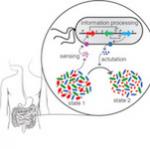 Out of a wide range of thirteen projects funded by the UW–Madison Microbiome Initiative, two of them are led or in collaboration with Department of Biochemistry faculty members. The funding was announced June 20, 2017.
Assistant Professor Ophelia Venturelli is the principal investigator for Developing Model-Guided Frameworks to Dissect Butyrate Production in the Human Gut Microbiota, and Professor Michael Sussman is a co-principal investigator on a project titled The Microbiome Hub: Enabling a Biological Revolution at UW–Madison.
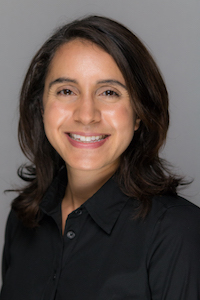 Ophelia Venturelli
 Michael Sussman